
 Română
  English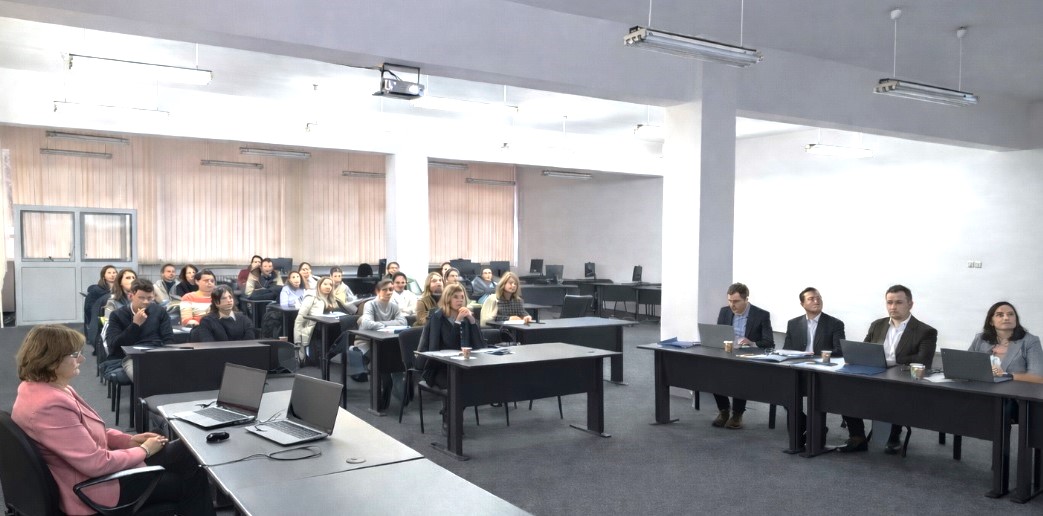
A high-level training course on Heavy Liquid Metal-Cooled Fast Reactors, with a particular focus on Lead-Cooled Fast Reactors (LFR), organized under IAEA TC ROM2/010 Project, has been successfully completed at RATEN ICN premises, in Mioveni, Romania.
Implemented by National Commission for the Control of Nuclear Activities (CNCAN) and RATEN, the ROM 2/010 Technical Cooperation Project aims to increase national capacities in all aspects related to safety assessments and licensing process of advanced nuclear systems (NuScale SMR and ALFRED) in Romania.
Conducted from 16 to 20 February 2026, the program brought together 39 participants (some of them joining online) – engineers, researchers and nuclear professionals, all seeking advanced knowledge in next-generation nuclear energy systems.
Lectures were delivered by leading experts in the field, covering core topics like:
- Safety, Safety Assessments and Safety Demonstration;
- ALFRED Design and Experimental Support Infrastructure;
- Properties, benefits and issues of heavy liquid metal coolants;
- Neutronics and fuel performance aspects in core design;
- Materials performance and corrosion in HLM environments;
- Pool Thermal-Hydraulic: Experiments, Simulations, Technology;
- Waste management and advanced reactors.
The course aimed to strengthen expertise in advanced reactor technologies as part of the global transition toward low-carbon energy systems. A technical visit to ALFRED support infrastructure, respectively ATHENA (pool type installation for experiments and thermo-hydraulic tests) and ChemLab (laboratory for lead chemistry) experimental installations, was included in the program.
The panel “Challenges to implement LFRs” concluding the training highlighted that while Lead-Cooled Fast Reactors offer compelling advantages in safety, sustainability, and waste reduction, they face significant challenges in materials performance, fuel cycle development, regulatory approval, and economic competitiveness. The path forward will require sustained research, demonstration projects, regulatory harmonization, and international collaboration.
The participants appreciated the program’s interdisciplinary approach and the opportunity to exchange knowledge with specialists from different countries and organizations.