
 English
  Română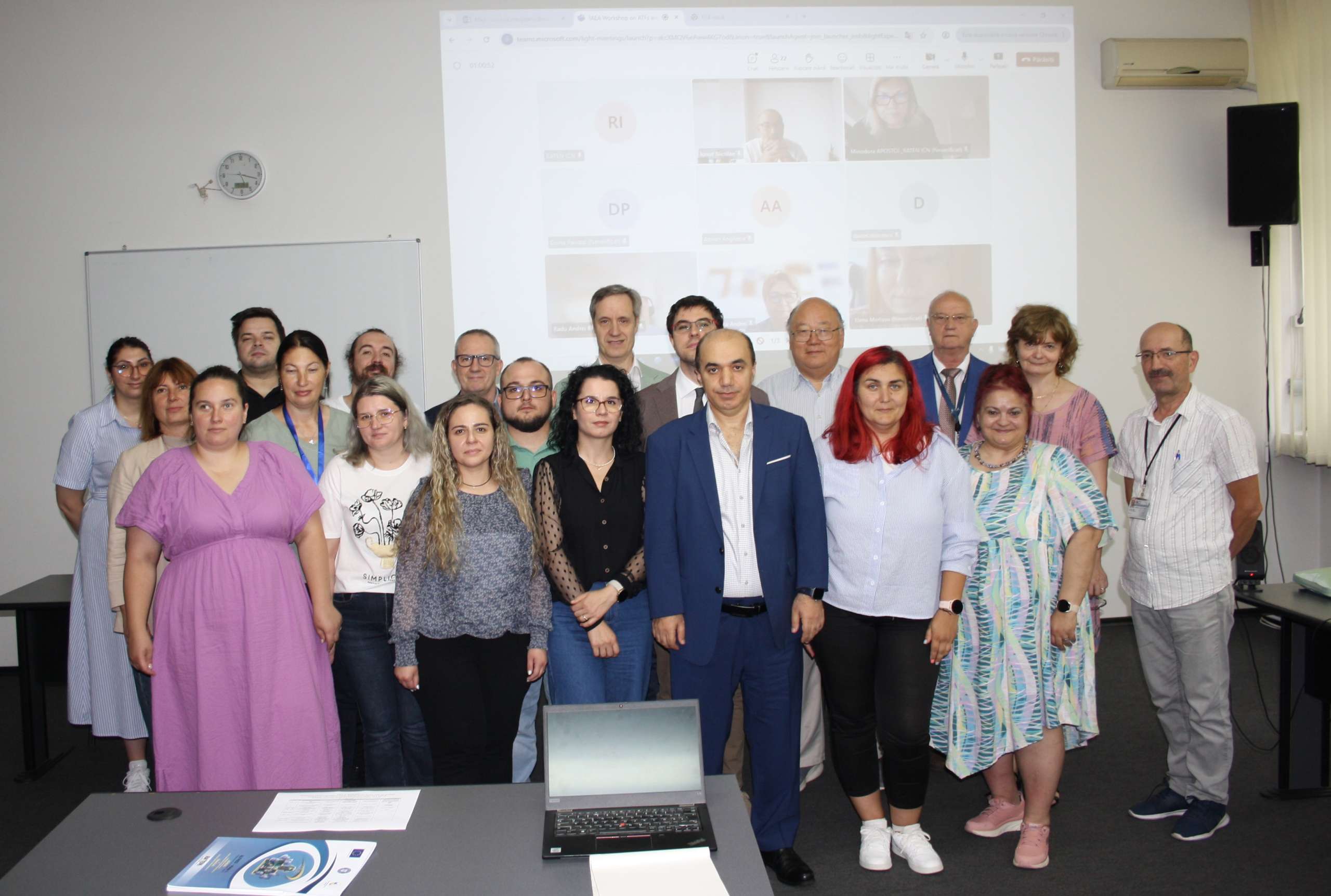
A high-level national training course on Accident Tolerant Fuels and Conventional Fuels for use in SMRs, organized under IAEA TC ROM2/010 Project, has been successfully completed at RATEN ICN premises (Mioveni, Romania). The training course aim was to strengthen technical capacity on advanced nuclear fuels, including ATFs and SMR fuels, focusing on design, performance, and related technologies.
ROM 2/010 Technical Cooperation Project entitled Strengthening National Capabilities to License Advanced Nuclear Systems (SMR and ALFRED) is implemented by the National Commission for the Control of Nuclear Activities (CNCAN) and RATEN.
Conducted from 13 to 17 July 2026, the program brought together 44 participants (some of them joining online) – engineers, researchers and nuclear professionals (representing: S.N. Nuclearelectrica S.A., FCN Pitesti, RoPower Nuclear S.A., CNCAN, RATEN CITON, and RATEN ICN), all seeking advanced knowledge in design, performance, and related technologies for advanced nuclear fuels, with focus on ATFs and SMR fuels.
Lectures were delivered by leading experts in the field: Dr. Zinghao Zhang (Tractebel Engineering), Dr. Paul Van Uffelen (European Commission, Directorate General Joint Research Centre Karlsruhe), Prof. Jose Cesar Queral Salazar (University Politechnica Madrid), Dr. Francesco Lodi (Italian National Agency for New Technologies, Energy and Sustainable Economic Development). The delegation was led by Mr. Surik Bznuni (IAEA, Nuclear Safety and Security Dept.)
The national training course agenda covered the following topics:
- PWR fuel behaviours in normal operation and accident conditions
- PWR Fuel design, safety criteria and safety evaluation methods
- PWR Fuel Rod Codes Development, Verification and Validation
- PWR and LW-SMR Fuel Design, Qualification and Licensing
- Use of PWR conventional fuel in NuScale SMR: design, tests, safety analysis
- PWR ATF design and qualification
- PWR ATF safety criteria, codes, verification and validation with gaps and needs, readiness for licensing
- Use of PWR ATF in NuScale SMR: applicability of safety criteria and safety analysis
- Innovative fuels for LFRs: fuel behaviours, design basis, codes and methods, safety analysis; gaps and challenges in licensing and use of LFR fuel
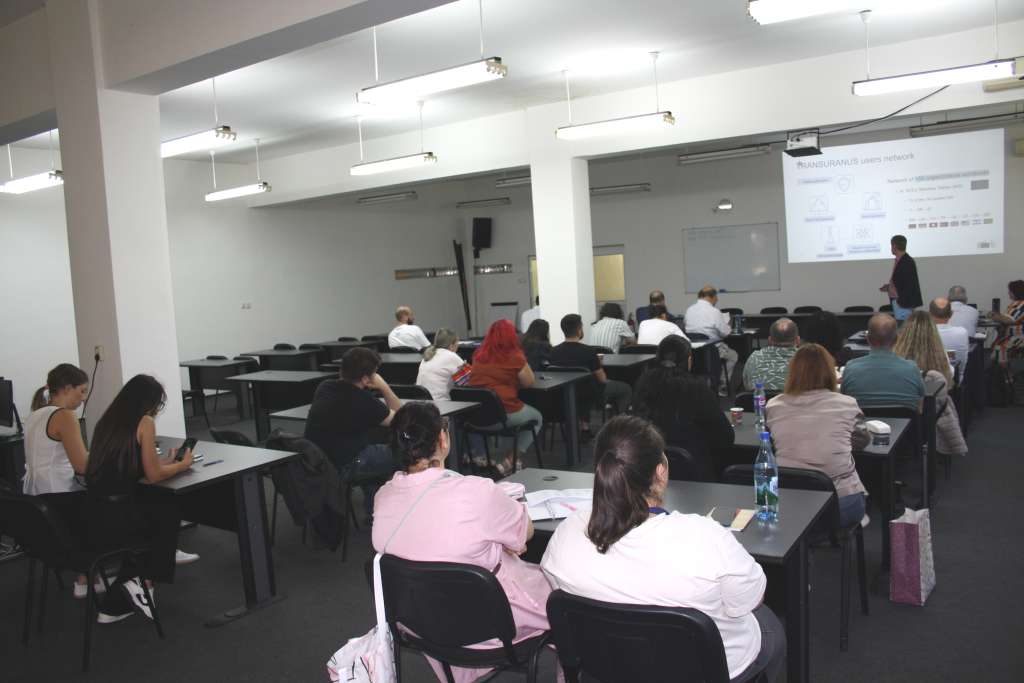
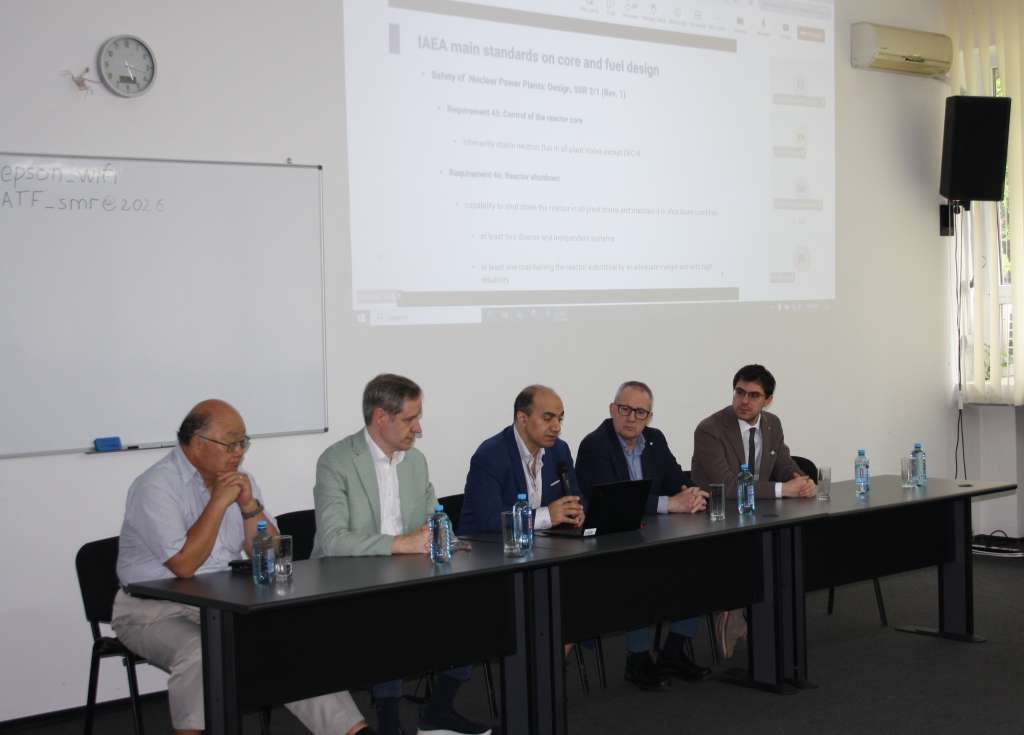
An important discussion among the participants and lecturers was related to ATF concept definition in the European Taxonomy. Based on several publications derived from IAEA’s CRPs dealing with the ATF concepts design, experiments, and safety evaluations, and current existing ATF doped UO2 fuels and cladding materials with ATF properties (Cr-coated M5 or optimized Zirlo), a new approach is supported to define ATF as Advanced Technology Fuel instead of Accident Tolerant Fuel in IAEA’s Safety Guides Series. Considering previous revealed aspects, several European utilities prepared a position paper/letter to be addressed to European Commission regarding the Taxonomy evaluation criteria for nuclear power.
The participants appreciated the program’s comprehensive interdisciplinary approach and the huge amount of information provided by the distinguished lecturers in a skilled compacted presentations including aspects related on fuel design, safety evaluations, experiments and post irradiation examinations, fuel rod codes development, verification and validation, qualification, and licensing. The insights on gaps and challenges in licensing of fuels for advanced nuclear systems (NuScale SMR and ALFRED) in Romania were appreciated as really useful.